
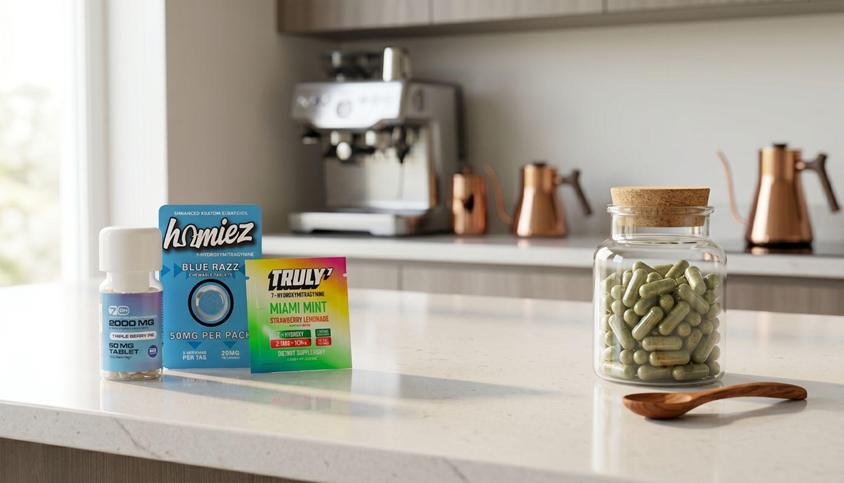
Capsules made kratom easier to use. They hid the bitter taste, simplified dosing, and let users carry a few days of supply in a pocket. For a long time, capsules were the upgrade path away from raw powder. Tablets changed the conversation again. Pressed 7-OH tablets pack more active material into a smaller delivery system, and they raise the bar for what a kratom product can do. Here is how the two formats actually compare across the things buyers care about.
What Is Inside Each Format?
Kratom capsules are gelatin or vegetable shells filled with ground leaf powder. They usually hold between five hundred and seven hundred milligrams of powder per capsule. The active alkaloid content depends entirely on the source leaf, which varies between strains and harvests.
7-OH tablets contain isolated 7-hydroxymitragynine pressed with a binder. The active material is concentrated, weighed, and verified before the tablet is formed. The result is a finished product that lists its exact dose on the label instead of buried inside a powder blend.
Dosing Accuracy and Predictability
Capsule dosing involves a guessing game. To match the effects of a moderate kratom session, users often swallow eight to twelve capsules. Each capsule contains slightly different alkaloid levels even within the same bottle, which means the total effective dose can swing from one session to the next.
Tablets remove the variation. One tablet equals one known dose. There is no need to count and recount capsules or to wonder why one batch felt stronger than the last. For anyone who values consistency, this single advantage often justifies the switch.
Speed of Onset and Effect Profile
Capsules need extra time. The gelatin shell has to dissolve, then the powder has to clear digestion, then the body has to convert mitragynine into 7-hydroxymitragynine. The chain takes thirty to fifty minutes for most users.
Tablets skip the conversion step. The 7-OH is already in its active form, which speeds up onset noticeably. Users typically feel the effects within fifteen to thirty minutes. That faster window is useful for morning routines, mid-shift breaks, or any moment where waiting an hour is not practical.
Cost Per Effective Dose
Capsules look affordable until you count how many it takes for one session. A bottle of one hundred capsules may sound generous, yet a regular user can burn through it in two weeks. Tablets carry a higher shelf price per unit, but the per-session cost is competitive once you account for how few tablets it takes to feel the desired effect.
Buyers who buy 7-OH tablets online from a reliable vendor usually find that monthly spend drops, especially when they choose a larger bottle or a bulk pack. Less material means less waste, less packaging, and a tighter budget.
Travel, Storage, and Daily Convenience
Capsules are easy to carry but bulky once you account for daily counts. Long trips often require a second bottle or a separate pill case. Tablets are lighter for the same number of effective sessions and they take up less room in a bag.
Storage also favors tablets. Capsules can soften in heat and absorb moisture, which leads to clumping inside the shell. Pressed tablets stay intact across a wider temperature range, which protects potency through summer travel or a humid bathroom shelf.
Lab Testing and Quality Control
Top capsule brands test their batches, yet the testing applies to the powder, not to each capsule. Differences in fill weight create small but real differences in dose. Tablet brands test the pressed tablets, which means the dose on the bottle reflects what is actually in the tablet.
If you care about clean sourcing and verifiable potency, the tablet category gives you tighter quality control across the board.
Who Should Stick With Capsules?
Capsules still make sense for users who enjoy the gradual lift of full-spectrum leaf material. Some people prefer the rounded effect of the whole leaf blend instead of an isolated alkaloid. Capsules also serve well as a backup format for travelers who want maximum discretion.
Who Should Move to Tablets?
Anyone who wants faster onset, predictable strength, a smaller daily load, and a cleaner cost-per-session profile should move to tablets. The category was built around the modern user who values speed and accuracy. Once you make the switch, going back to a bottle of eighty capsules feels like a step backward.
Tablet Quality Differences Within the Format
Not every tablet on the shelf is built to the same standard. Premium tablets use cleaner extractions, food-grade binders, and tighter quality control on each batch. Bargain tablets often skip these details, and the experience suffers. If you decide to move from capsules to tablets, the brand matters just as much as the format change itself.
Read the lab panel for every brand you consider. The active percentage, heavy metal counts, and microbial results all tell you whether the brand takes the work seriously. A clean panel paired with a reasonable price is the formula most experienced buyers look for.
Habit Formation and Daily Reliability
Capsules earned their following because they removed taste and mess. Tablets take that progress one step further by removing dose ambiguity. Once your routine is built around a known milligram count, you can plan your day with much more accuracy. Mornings, midday breaks, and evening winding-down all become easier to manage.
Reliable products produce reliable habits. The smoothness of the format encourages consistent use, which in turn produces a stable baseline you can tune over time. That feedback loop is the quiet reason tablets keep gaining ground.
The Final Word
Capsules opened the door for kratom in modern lifestyles. Tablets walked through that door and redesigned the room. Both products have value, but the gap in dosing accuracy, speed, cost, and storage continues to widen in favor of pressed 7-OH tablets. If you have not tried them yet, a small bottle is the cleanest way to see the difference for yourself.
Key Takeaways and Smart Buyer Habits
Smart buyers treat every purchase as part of a longer journey rather than a single transaction. The brand you pick today shapes the routines, expectations, and habits you carry into next year. Take the time to verify the small details and the larger experience falls into place naturally.
