
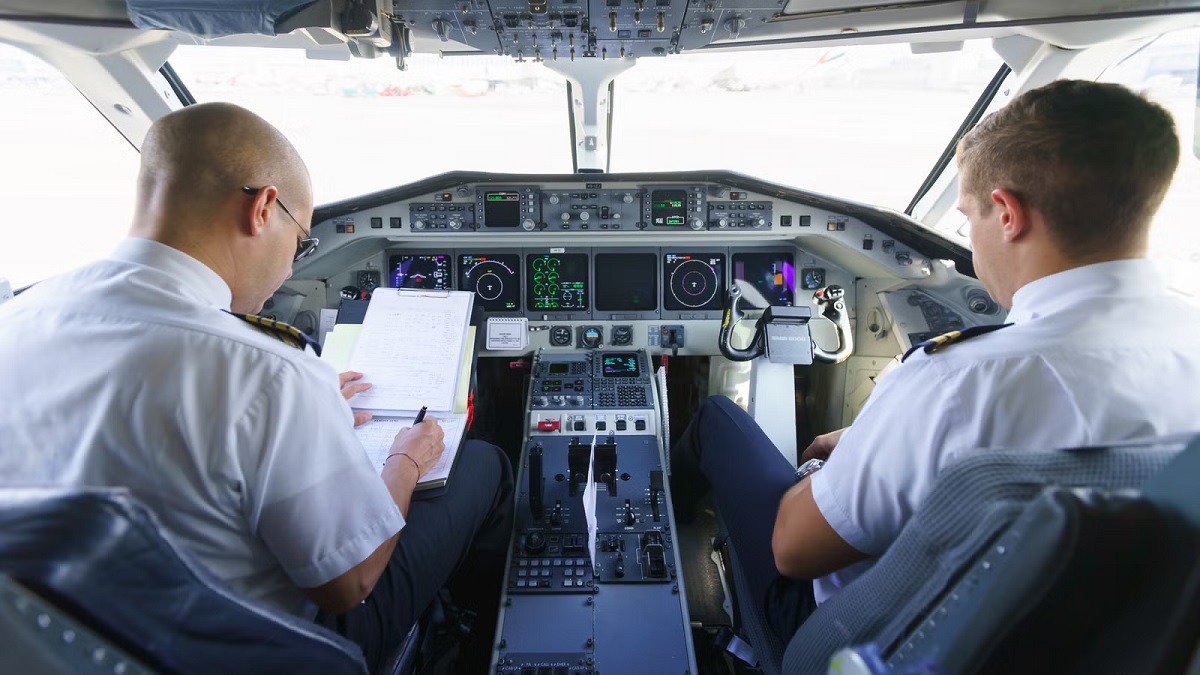
A type rating guarantees that a pilot possesses the specialized technical knowledge, muscle memory, and emergency handling skills required to fly a specific complex airliner safely. Standard commercial pilot licenses certify basic flight principles, navigation, and multi-engine operations, but they do not prepare an aviator for the unique systems, weight dynamics, and fly-by-wire logic of modern transport-category jets. Mastering a specific aircraft type eliminates guesswork in high-stress cockpit environments, ensuring flight crews react instantly and correctly to flight deck anomalies. Mandatory type ratings protect hundreds of passengers daily by holding commercial pilots to uncompromising operational standards.
Mastering Complex Systems and Automation Logic
Commercial jetliners operate as highly sophisticated, computerized networks with distinct electrical, hydraulic, and flight management architectures. An experienced Boeing pilot cannot step into an Airbus flight deck and operate it intuitively, as the fundamental design philosophies, computer control laws, and automated systems differ significantly. Aviators must get familiar with every system valve, circuit breaker, and emergency override mechanism specific to that airframe in order to obtain a type rating.
Understanding automation logic prevents mode confusion a dangerous scenario where pilots misinterpret what the flight guidance computer is doing. Ground school and simulator training break down complex system interactions, teaching pilots how flight envelope protection works on their specific jet. This deep technical mastery allows flight crews to monitor automated systems effectively and intervene seamlessly when manual control becomes necessary.
Standardizing Cockpit Workflows and Crew Coordination
A320 Type Ratings programs enforce rigid multi-crew cooperation protocols that ensure two pilots who have never met can operate together flawlessly. Standard operating procedures dictate every verbal callout, switch flip, and checklist item for every phase of flight, from pre-flight setup to shutdown. Because every pilot type-rated on a specific aircraft follows the exact same operational playbook, cockpit communication remains clear, concise, and predictable.
Standardized workflows eliminate ambiguity during high-workload phases like low-visibility landings or busy terminal departures. Each crew member knows their precise responsibilities as pilot flying or pilot monitoring, reducing cognitive load and preventing critical tasks from slipping through the cracks. This standardized harmony across the flight deck forms the backbone of commercial aviation safety worldwide.
Drilling High-Risk Emergencies in Full-Flight Simulators
Type rating qualification subjects pilots to extreme, high-risk emergency scenarios that are impossible to practice safely in an actual airplane. Advanced level-D full-flight simulators replicate the exact cockpit layout, visual cues, and motion dynamics of the target aircraft with stunning realism. Pilots spend dozens of hours managing engine failures on takeoff, hydraulic pressure losses, flight deck fires, and severe windshear conditions.
Repeated exposure to worst-case scenarios builds instant muscle memory and emotional composure. When a real-world system failure occurs, pilots do not waste valuable seconds searching for answers; they execute practiced memory items instantly. Simulator training conditions flight crews to isolate faults, stabilize the aircraft trajectory, and land safely regardless of environmental conditions.
Safeguarding Global Aviation Safety and Airline Operations
Type ratings protect the massive financial investments airlines make in their fleets while preserving the stellar safety record of commercial air travel. Modern transport aircraft fly at high altitudes, carry heavy fuel loads, and land at high approach speeds where minor piloting errors carry severe consequences. Mandatory type ratings guarantee that every captain and first officer operating a commercial flight meets uniform competency standards worldwide.
Airlines rely on type-rated crews to maintain scheduling reliability, minimize maintenance wear, and optimize fuel efficiency during daily operations. Pilots who possess deep knowledge of their airframe optimize climb profiles, handle crosswind landings gracefully, and avoid overstressing airframe components. Specialized training transforms skilled aviators into masters of their specific machine, ensuring passenger transport remains the safest mode of travel on the planet.
Conclusion
Type ratings serve as an essential bridge between general aviation skill and commercial airline mastery. Requiring pilots to complete rigorous airframe-specific training guarantees absolute technical command, seamless crew coordination, and instantaneous emergency response capabilities. Forcing aviators to prove their competence in state-of-the-art simulators protects passengers, preserves high safety standards, and ensures modern commercial aviation runs smoothly every day.
